Where Does Your Boat Wrap Go? Fairgoers Asked. We Had Answers.
- September 18, 2026
- Events
Every spring, thousands of Minnesota boats come out of storage wrapped in protective plastic shrink wrap. For years, boat owners had limited options for what to do with that material after the season.
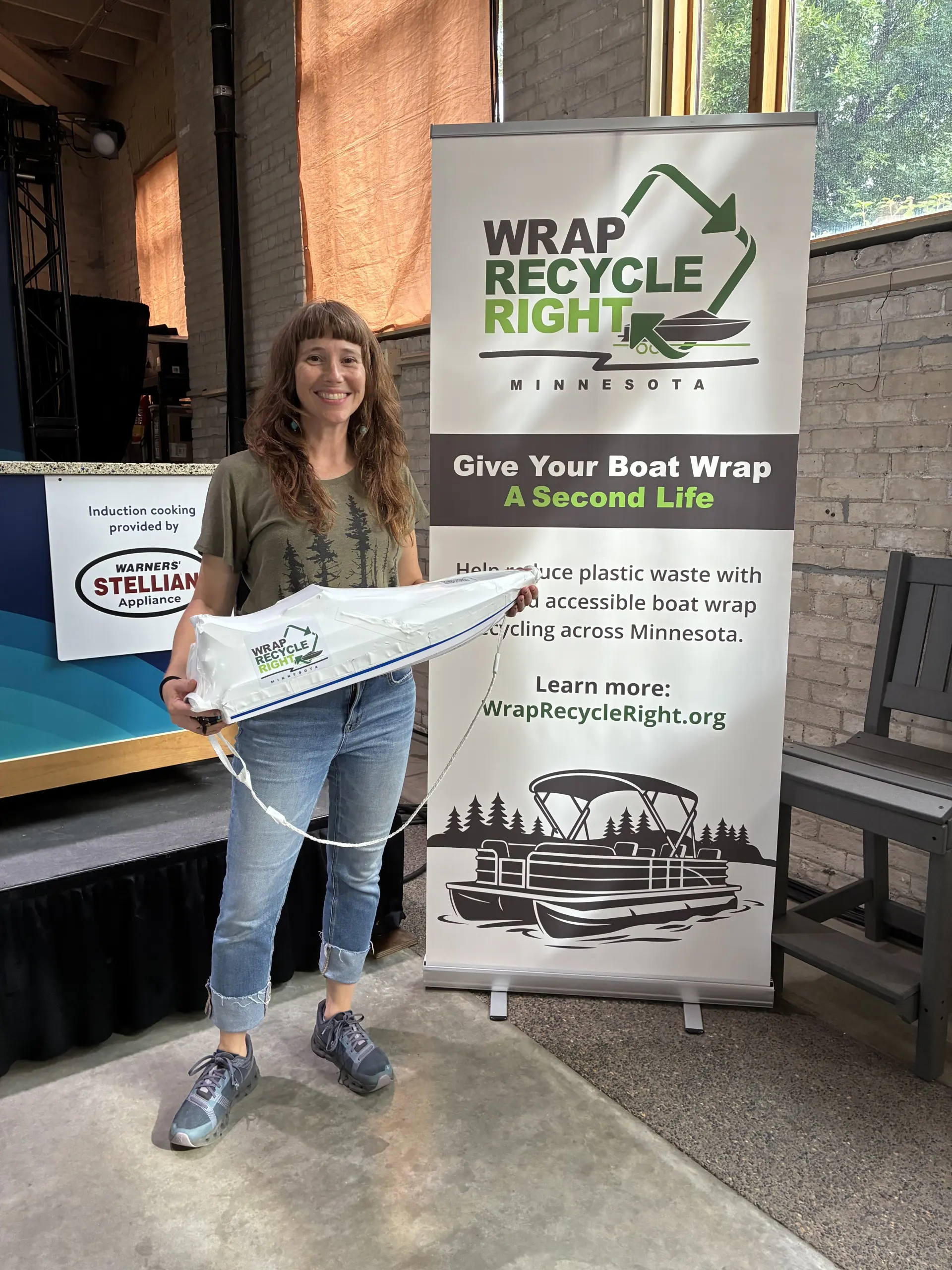
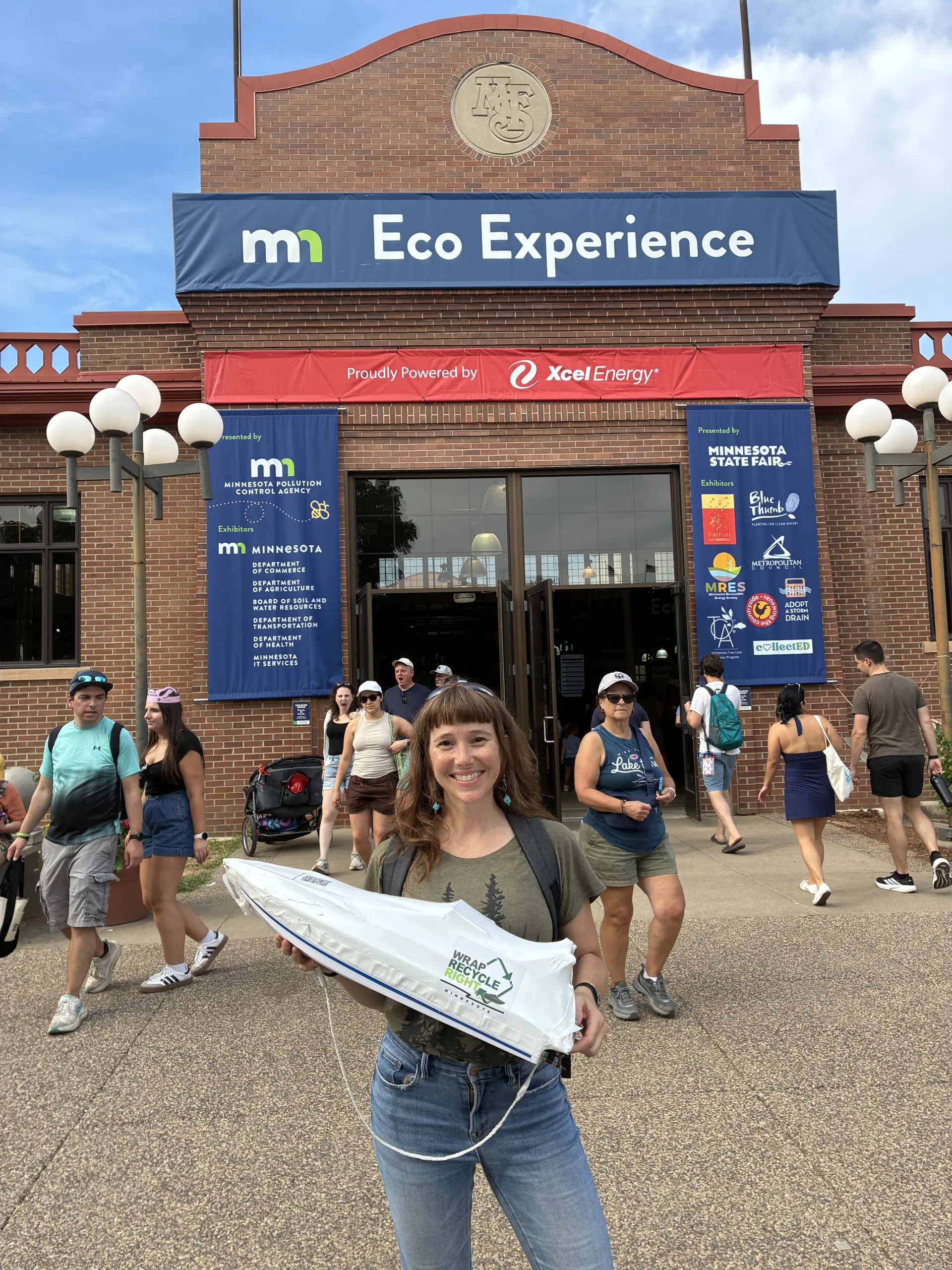
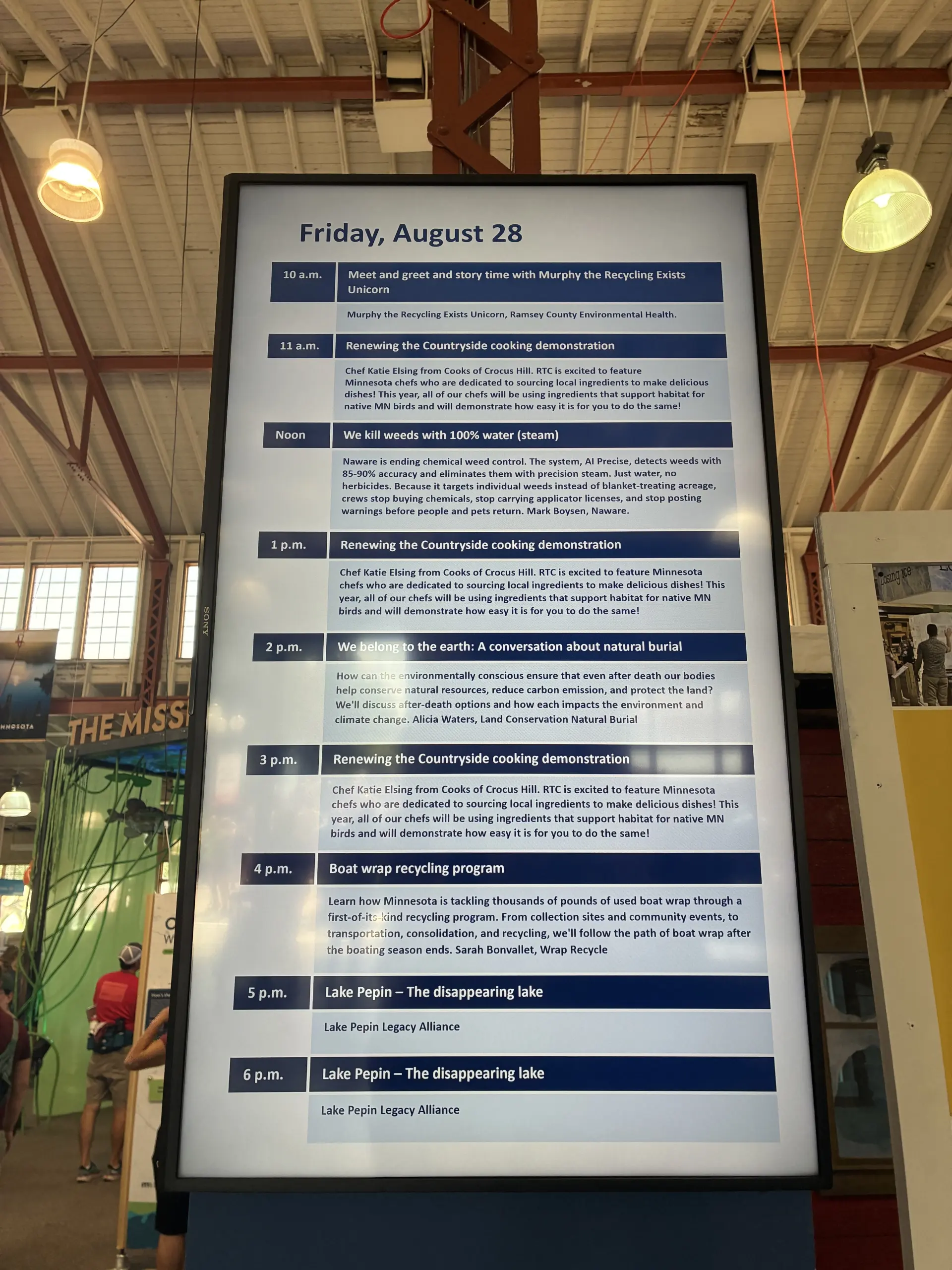
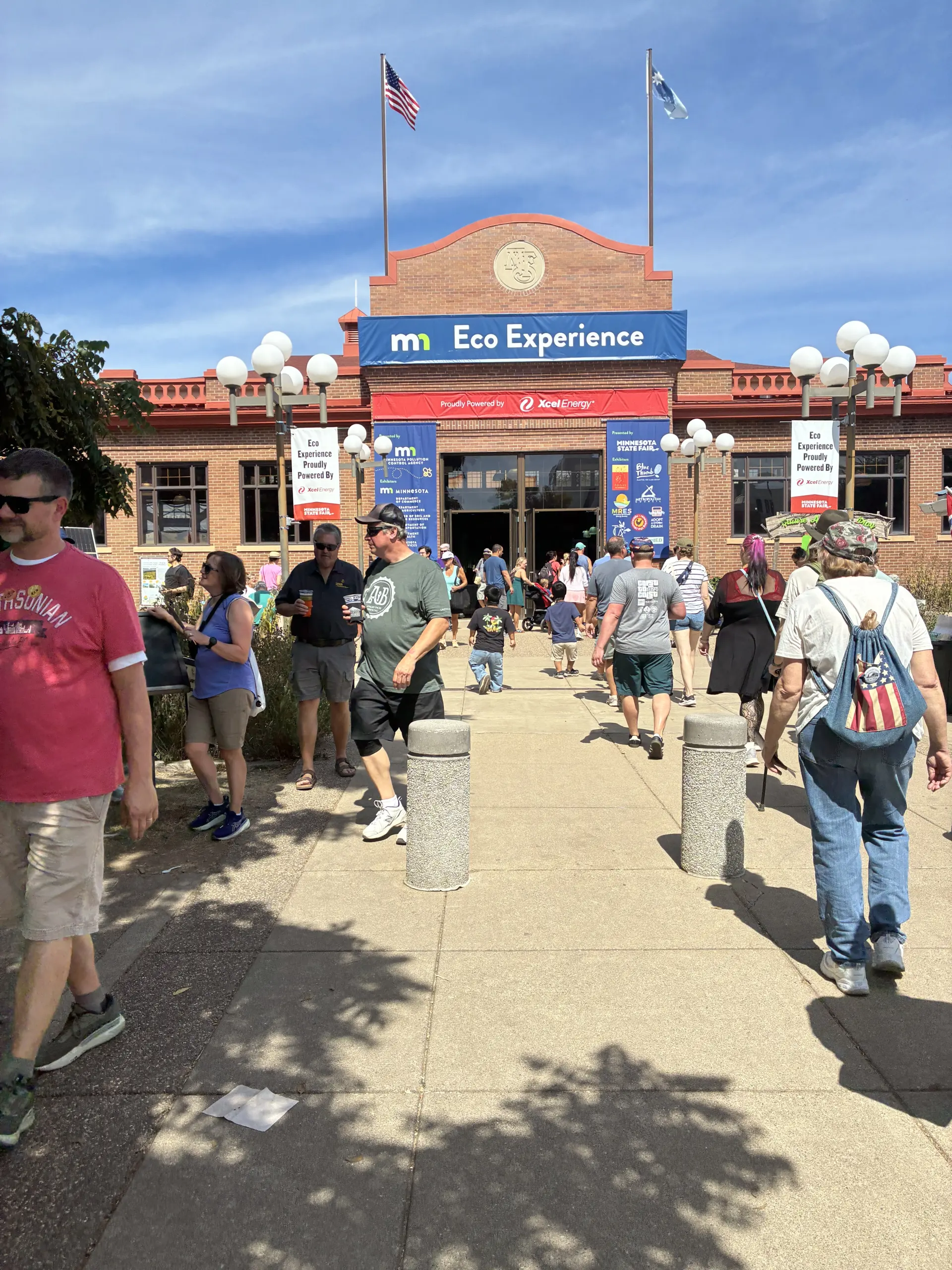
This August, Sarah Bonvallet, Wrap Recycle Right’s Operations Program Coordinator, took that question to the Sustainability Stage at the Minnesota State Fair’s Eco Experience building, sharing how Minnesota’s boat wrap stewardship program is changing what happens to boat wrap after it comes off the boat and how boat owners can be part of the program.
A First-in-the-Nation Program
In 2024, Minnesota became the first state in the U.S. to pass a product stewardship law for boat wrap. The Boat Wrap Stewardship Law (Minn. Stat. § 115A.1416) took effect on September 1, 2025, creating a statewide framework for collecting and recycling boat wrap.
Wrap Recycle Right is the branded program built to deliver on that law. Producers fund the collection and recycling system, while the Minnesota Pollution Control Agency (MPCA) approves the plan and establishes performance goals.
At least 50% of boat wrap sold in Minnesota must be collected and recycled by June 1, 2030, and at least 80% by June 1, 2035.
The program oversees collection, transportation, and recycling at no cost to the public.
That last part was news to many of the people Sarah talked with at the fair: recycling your boat wrap is free.
Boat Wrap Is Worth Recovering
One of the biggest surprises for fairgoers was learning that boat wrap can be recycled and turned into new products.
Most boat wrap is made from LDPE, or #4 plastic. When the wrap is clean, dry, and properly prepared, it can be collected, processed, and used as a raw material for new products.
The volumes are significant, too:
- A single wrapped pontoon can yield roughly as much plastic as 1,100 grocery bags.
- Minnesota uses an estimated 2 to 6 million pounds of boat wrap every year.
With a statewide collection and recycling program now in place, more of that material can be recovered and put to another use after the boating season.
So What Happens to the Wrap?
Another question Sarah heard throughout the fair was, “What happens to it after it’s collected?”
Once collected, boat wrap is inspected and sorted before being shredded and processed into material that manufacturers can use to make new products.
Recycled boat wrap can become products such as decking and composite lumber, outdoor furniture, construction-grade trash bags, and other construction-related materials. And maybe one day, it could even become new boat wrap, allowing the material to be used again for its original purpose.
Fairgoers could even see an example of recycled plastic products firsthand. Vendor By the Yard was displaying outdoor furniture made from post-consumer recycled plastic at the Eco Experience.

Year One: The Numbers
The first collection season brought in 194,463 pounds of boat wrap across 64 collection sites.
That’s just shy of the program’s first-year goal of 200,000 pounds and roughly equivalent to 16 million grocery bags.
Those results show what is possible when boat owners, businesses, collection sites, transporters, and recyclers all participate in the process.
And this is just the beginning.
Ready to Recycle Your Wrap?
Proper preparation is an important part of the recycling process. Clean, dry wrap is key to making sure it can be recycled.
For the complete step-by-step instructions, check out How to Recycle Your Boat Wrap or download our halfsheet here. It walks through how to remove your wrap, prepare it for recycling, and get it to a participating collection site.
You can also find an approved collection site using the interactive map at wraprecycleright.org/interactive-map.
Media Relations
Reverse Logistics Group [US, New Jersey]
NEED HELP?
If you believe you may be an obligated producer under Minnesota’s Boat Wrap Stewardship Law, contact CIFFRO. We’ll guide you through every step-from confirming your obligation to becoming a participating member in the plan.